 idontspeak
I can't speak English.I don't speak English.
Both sentences are understood. Only the second is what people actually say. That is the kind of gap this app is built to close.
Talk out loud with an AI partner in six languages. Your sentence is corrected the moment you say it, explained in your own language, and comes back as a quiz just as you start to forget it.
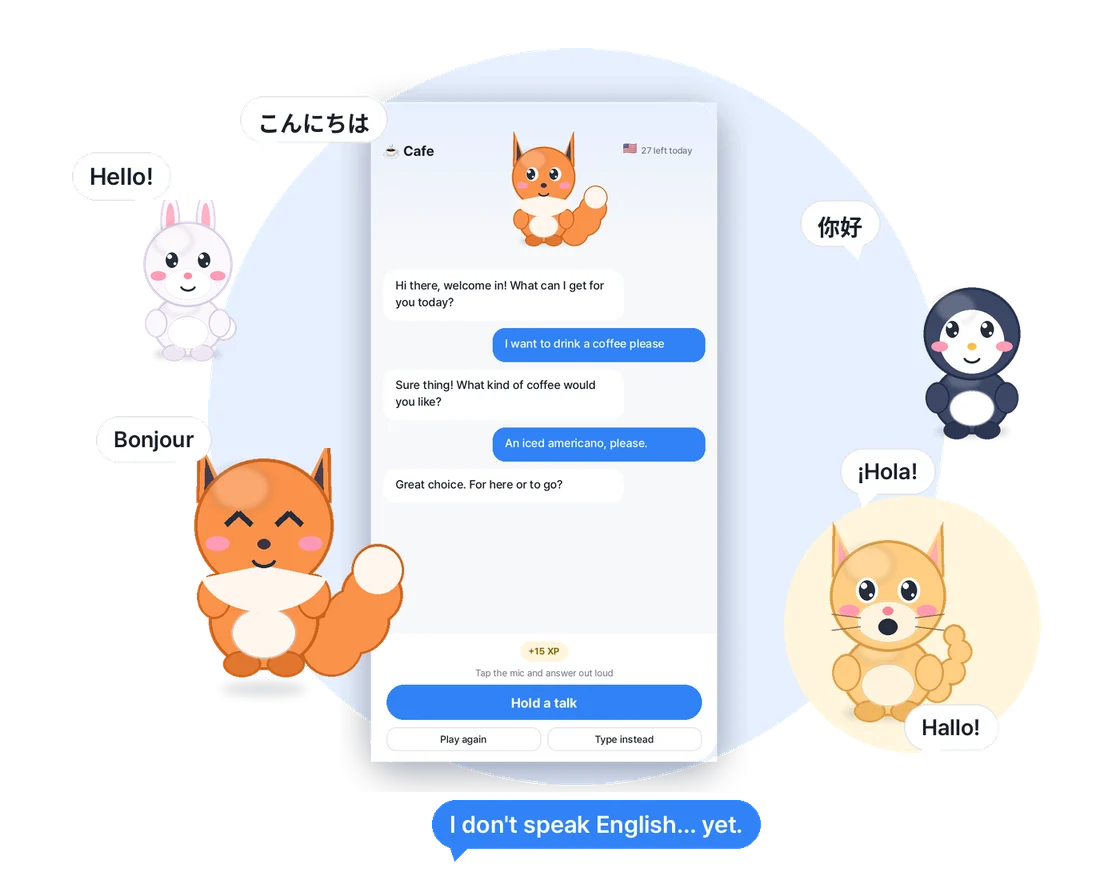
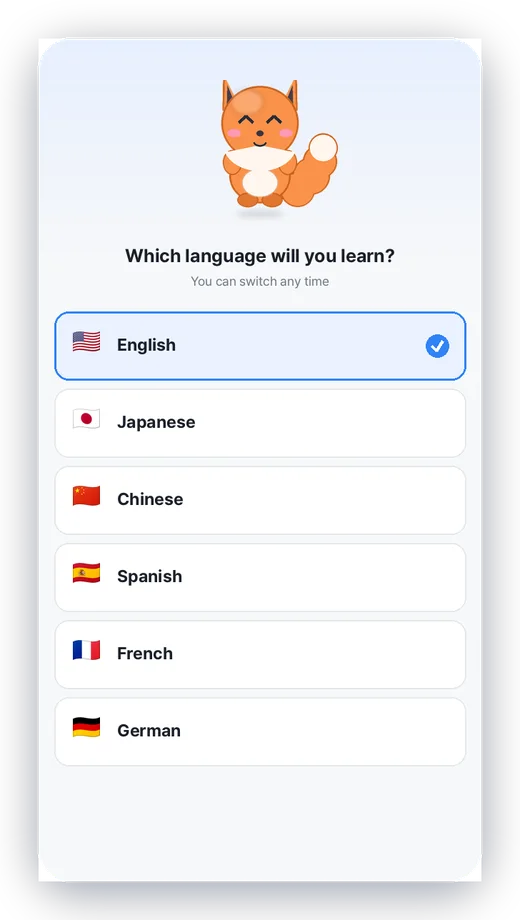
Six languages to practise
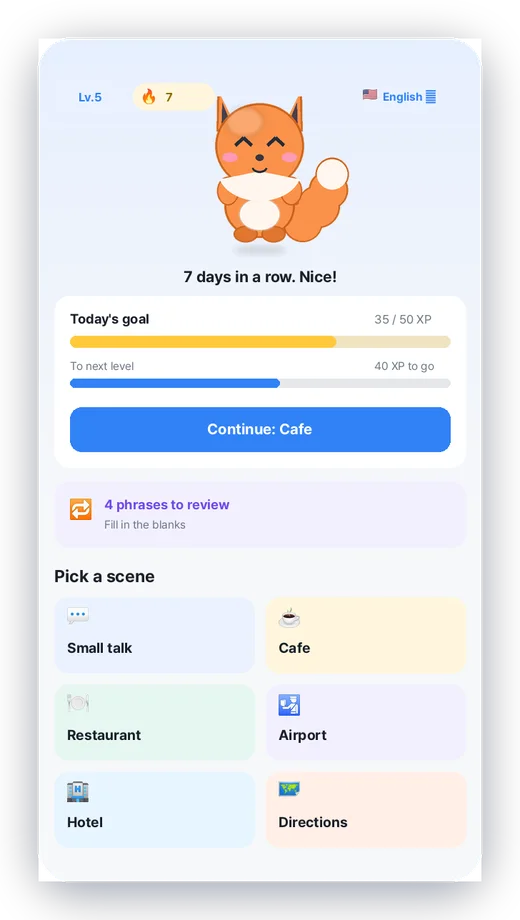
Switch language on the home screen at any time. The conversation, the corrections and the review quizzes all follow, and your progress is kept separately for each language.
Speaking practice, not another reading app
Talk, and it talks back
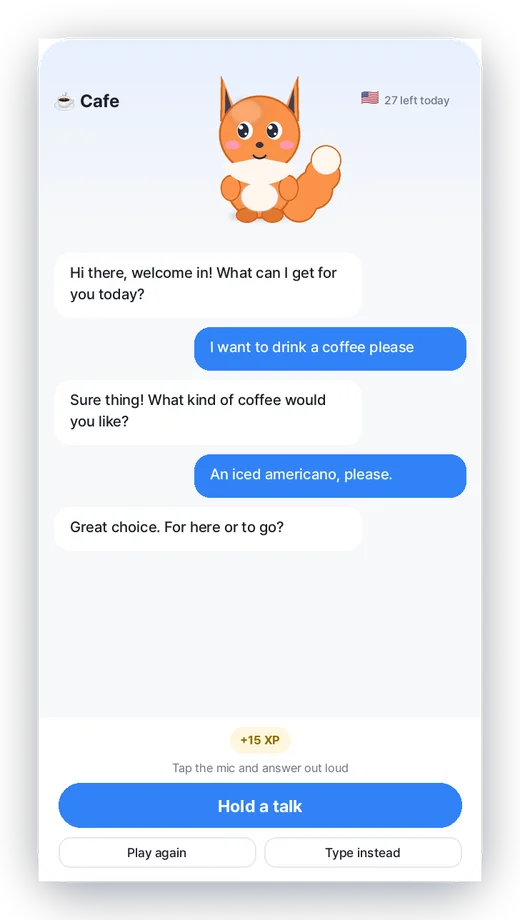
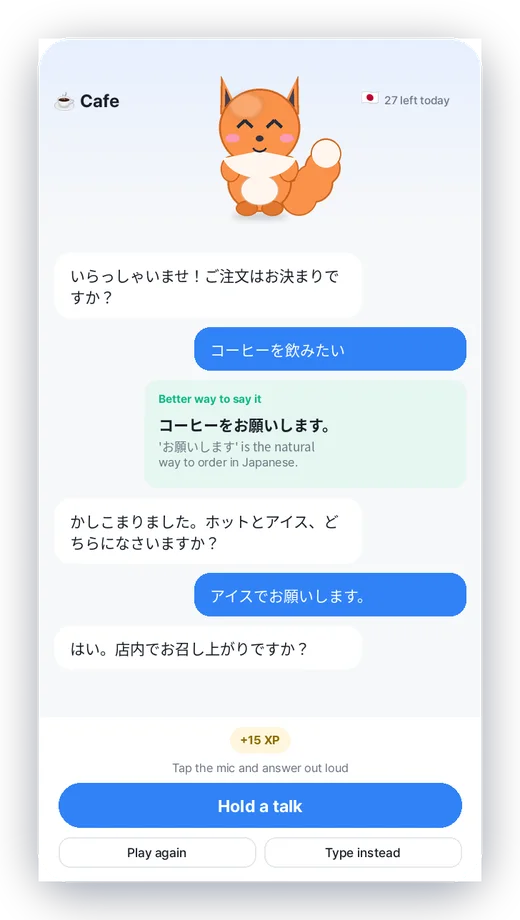
Tap the microphone and answer out loud. The partner replies like a person and always ends with a question, so the conversation keeps moving instead of dying after one line. No microphone handy? Type instead.
Corrected the moment you say it
Say “I want to drink a coffee” and it offers “I'd like a coffee, please” with a one-line reason. Nothing is corrected when your sentence is already fine, so praise still means something.
Explained in your language
The reply stays in the language you are practising. The explanation arrives in yours, so you never have to decode the correction before you can use it.
Back just as you forget
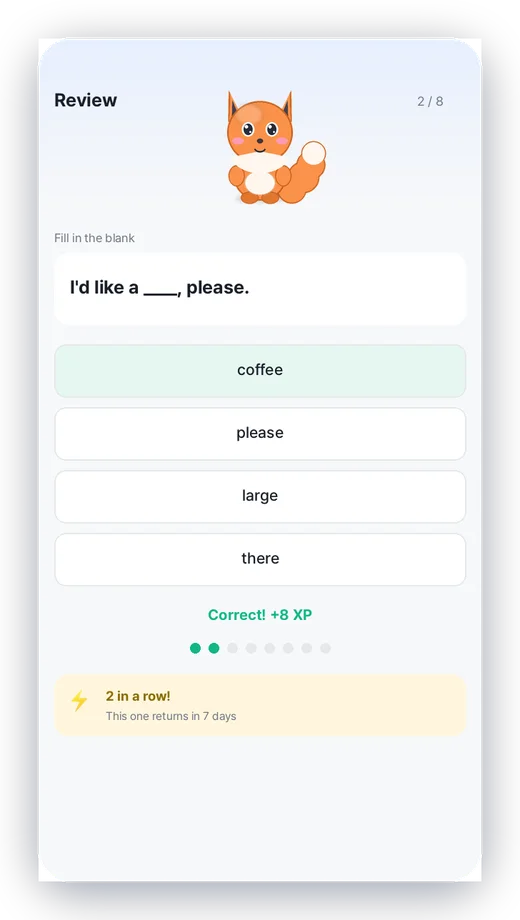
Every corrected phrase returns as a fill-in-the-blank quiz after 1, 3, 7, 14 and 30 days — spaced along the forgetting curve rather than crammed.
A buddy that reacts
Your animal buddy leans in while you speak, thinks while the reply is forming, and celebrates when a sentence comes out clean.
At your own pace
Beginner, everyday or advanced. You can also slow down how fast your partner speaks until your ear catches up.
What gets corrected
These are real corrections from the app. Pick the language you are learning to see the rest.
Examples are shown in the language you are practising. The explanation appears in your language inside the app.
Learned once, then again five times
A phrase you were corrected on does not stay learned because you understood it once. idontspeak schedules it for you: the same phrase comes back as a fill-in-the-blank quiz on this ladder, and only then is it treated as yours.
Quizzes hide the key expression rather than a random word — which matters in Japanese and Chinese, where there are no spaces to break a sentence on.
Twelve real-life situations
 Small talk
 Cafe
Cafe Restaurant
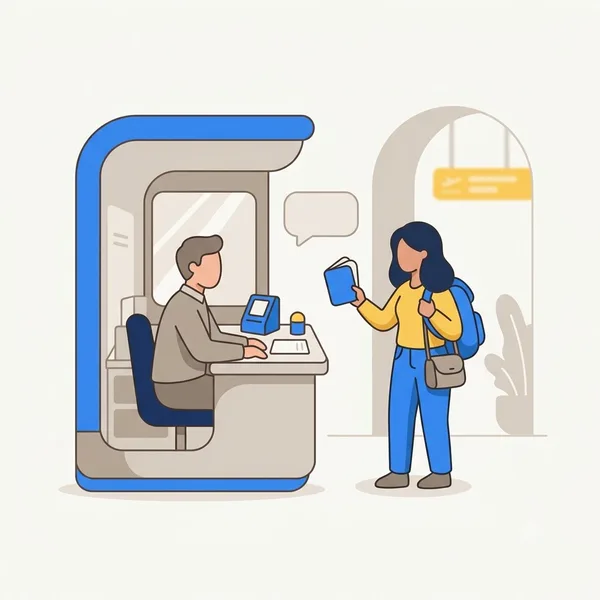 Airport immigration
 Hotel check-in
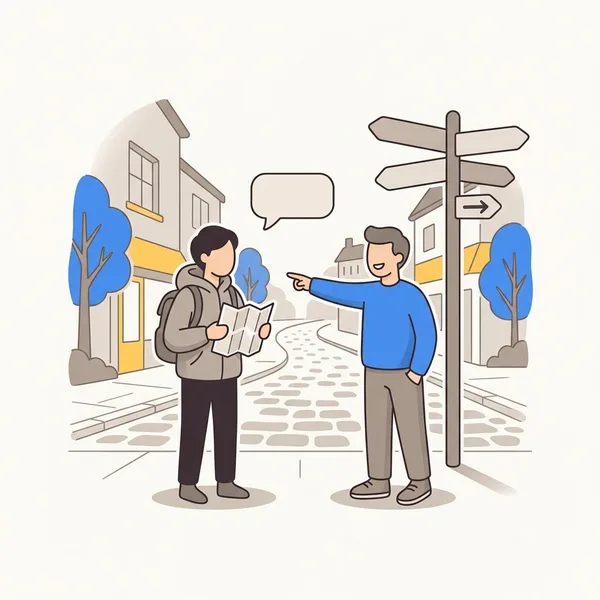 Asking directions
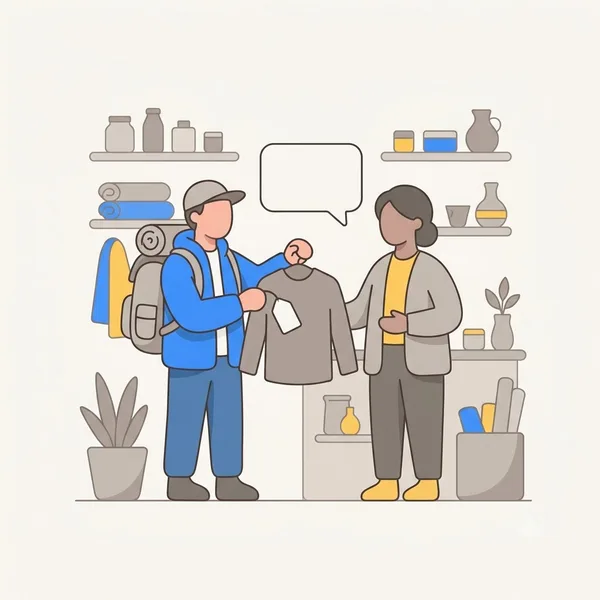 Shopping
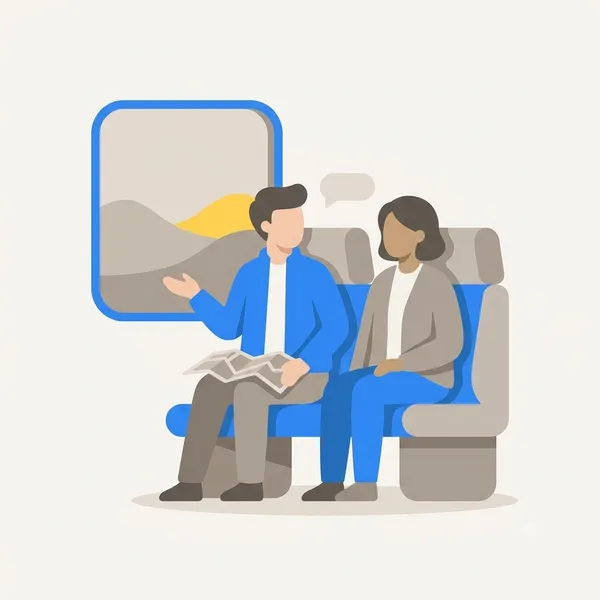 Travel chat
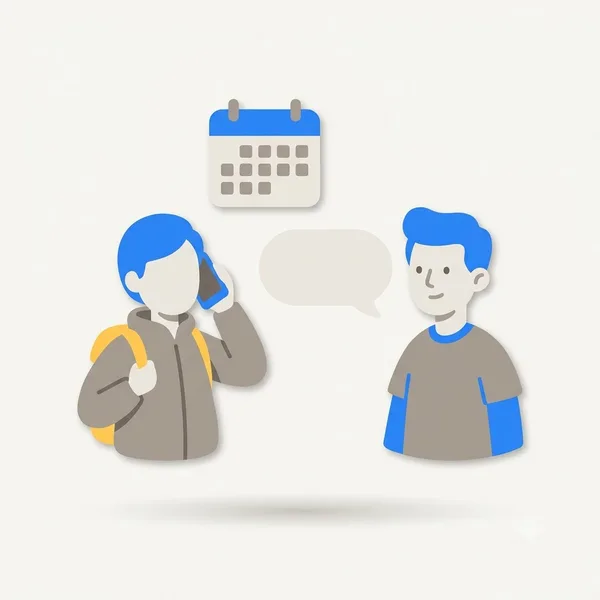 Phone booking
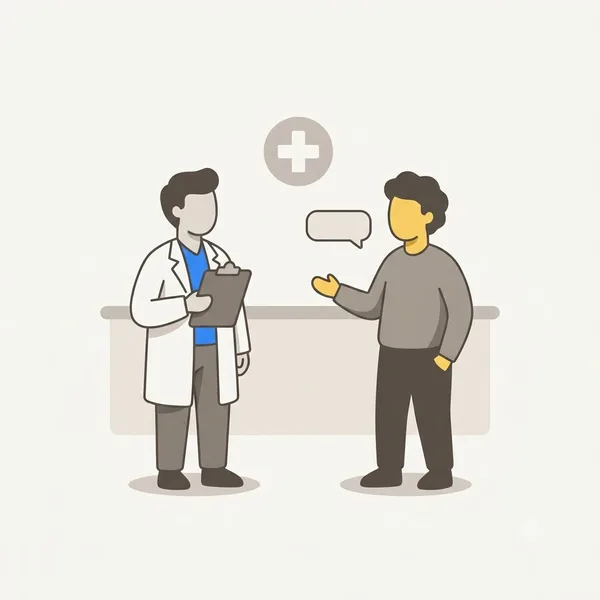 Clinic
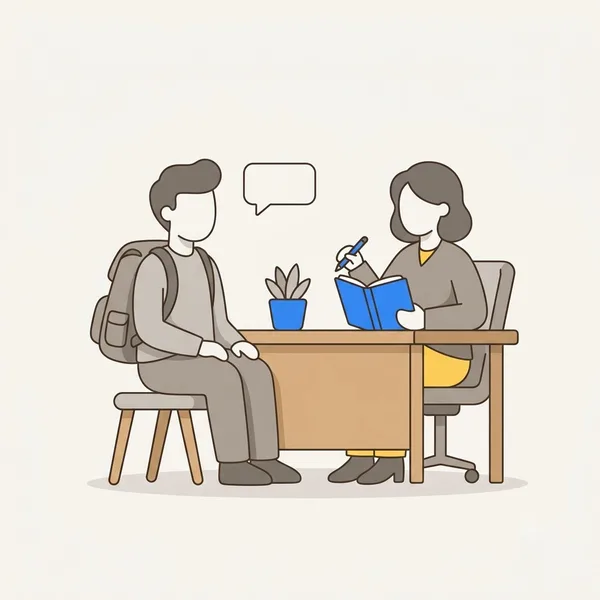 Job interview
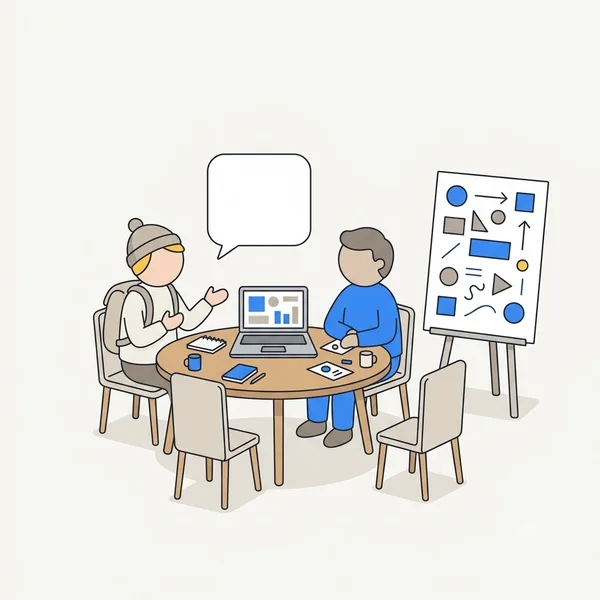 Work meeting
Twelve situations, and how each one opens
Every situation starts with the partner speaking first, so you never face an empty screen. These are the actual opening lines from the app.
| Situation | Opening line |
|---|---|
| Small talk | Hi! Good to see you. How has your day been so far? |
| Cafe | Hi there, welcome in! What can I get for you today? |
| Restaurant | Good evening! Are you ready to order, or do you need a minute? |
| Airport immigration | Good morning. May I see your passport, please? What brings you here? |
| Hotel check-in | Welcome to the Grand Hotel! Do you have a reservation with us? |
| Asking directions | Oh, hi! You look a little lost. Are you looking for something? |
| Shopping | Hi! Let me know if you need a hand. Anything you're looking for today? |
| Travel chat | Hey! Is this your first time here? I'm travelling too. |
| Phone booking | Good afternoon, City Clinic. How may I help you? |
| Clinic | Hello, come on in. What seems to be the problem today? |
| Job interview | Thanks for coming in. So, tell me a little about yourself. |
| Work meeting | Morning! Before we start, could you give me a quick update? |
| Situation | Opening line |
|---|---|
| Small talk | こんにちは!会えてうれしいです。今日はどんな一日でしたか? |
| Cafe | いらっしゃいませ!ご注文はお決まりですか? |
| Restaurant | こんばんは。ご注文はお決まりでしょうか? |
| Airport immigration | おはようございます。パスポートを見せていただけますか?ご旅行の目的は何ですか? |
| Hotel check-in | グランドホテルへようこそ。ご予約はいただいておりますか? |
| Asking directions | あ、こんにちは。道に迷われましたか?何かお探しですか? |
| Shopping | いらっしゃいませ。何かお探しのものはありますか? |
| Travel chat | こんにちは!ここは初めてですか?私も旅行中なんです。 |
| Phone booking | お電話ありがとうございます、シティクリニックです。ご用件をどうぞ。 |
| Clinic | こんにちは、どうぞお入りください。今日はどうされましたか? |
| Job interview | 本日はお越しいただきありがとうございます。まず自己紹介をお願いできますか? |
| Work meeting | おはようございます。始める前に、進捗を簡単に教えてもらえますか? |
| Situation | Opening line |
|---|---|
| Small talk | 你好!很高兴见到你。今天过得怎么样? |
| Cafe | 欢迎光临!请问您想喝点什么? |
| Restaurant | 晚上好!请问现在可以点菜了吗? |
| Airport immigration | 早上好,请出示您的护照。请问您来这里的目的是什么? |
| Hotel check-in | 欢迎入住大酒店!请问您有预订吗? |
| Asking directions | 你好,看你好像在找路。需要帮忙吗? |
| Shopping | 欢迎光临,需要帮忙随时叫我。今天想找点什么? |
| Travel chat | 嗨!你是第一次来这里吗?我也在旅行。 |
| Phone booking | 您好,城市诊所。请问有什么可以帮您? |
| Clinic | 你好,请进。今天哪里不舒服? |
| Job interview | 感谢你今天过来。先简单介绍一下你自己吧? |
| Work meeting | 早上好!开始之前,能简单说一下进展吗? |
| Situation | Opening line |
|---|---|
| Small talk | ¡Hola! Me alegro de verte. ¿Qué tal te ha ido el día? |
| Cafe | ¡Hola, bienvenido! ¿Qué te pongo? |
| Restaurant | Buenas noches. ¿Ya sabe qué va a pedir o necesita un momento? |
| Airport immigration | Buenos días. ¿Me enseña su pasaporte, por favor? ¿Cuál es el motivo de su viaje? |
| Hotel check-in | ¡Bienvenido al Gran Hotel! ¿Tiene una reserva con nosotros? |
| Asking directions | ¡Hola! Pareces un poco perdido. ¿Buscas algo? |
| Shopping | ¡Hola! Avísame si necesitas ayuda. ¿Buscas algo en particular? |
| Travel chat | ¡Hola! ¿Es tu primera vez aquí? Yo también estoy de viaje. |
| Phone booking | Buenas tardes, Clínica Ciudad. ¿En qué puedo ayudarle? |
| Clinic | Hola, pase. ¿Qué le pasa hoy? |
| Job interview | Gracias por venir. Cuénteme un poco sobre usted. |
| Work meeting | ¡Buenos días! Antes de empezar, ¿me puedes dar una actualización rápida? |
| Situation | Opening line |
|---|---|
| Small talk | Salut ! Content de te voir. Comment s'est passée ta journée ? |
| Cafe | Bonjour, bienvenue ! Qu'est-ce que je vous sers ? |
| Restaurant | Bonsoir ! Vous avez choisi, ou il vous faut encore une minute ? |
| Airport immigration | Bonjour. Votre passeport, s'il vous plaît. Quel est le motif de votre voyage ? |
| Hotel check-in | Bienvenue au Grand Hôtel ! Vous avez une réservation ? |
| Asking directions | Bonjour ! Vous avez l'air un peu perdu. Vous cherchez quelque chose ? |
| Shopping | Bonjour ! N'hésitez pas si vous avez besoin d'aide. Vous cherchez quelque chose ? |
| Travel chat | Salut ! C'est ta première fois ici ? Moi aussi je voyage. |
| Phone booking | Bonjour, Clinique de la Ville. Que puis-je faire pour vous ? |
| Clinic | Bonjour, entrez. Qu'est-ce qui ne va pas aujourd'hui ? |
| Job interview | Merci d'être venu. Parlez-moi un peu de vous. |
| Work meeting | Bonjour ! Avant de commencer, tu peux me faire un point rapide ? |
| Situation | Opening line |
|---|---|
| Small talk | Hallo! Schön, dich zu sehen. Wie war dein Tag bisher? |
| Cafe | Hallo, willkommen! Was darf ich dir bringen? |
| Restaurant | Guten Abend! Haben Sie schon gewählt, oder brauchen Sie noch einen Moment? |
| Airport immigration | Guten Morgen. Ihren Pass, bitte. Was ist der Zweck Ihrer Reise? |
| Hotel check-in | Willkommen im Grand Hotel! Haben Sie eine Reservierung? |
| Asking directions | Hallo! Sie sehen aus, als hätten Sie sich verlaufen. Suchen Sie etwas? |
| Shopping | Hallo! Sagen Sie Bescheid, wenn Sie Hilfe brauchen. Suchen Sie etwas Bestimmtes? |
| Travel chat | Hey! Bist du zum ersten Mal hier? Ich bin auch auf Reisen. |
| Phone booking | Guten Tag, City Clinic. Wie kann ich Ihnen helfen? |
| Clinic | Hallo, kommen Sie rein. Was fehlt Ihnen denn heute? |
| Job interview | Danke, dass Sie gekommen sind. Erzählen Sie mir ein bisschen von sich. |
| Work meeting | Guten Morgen! Bevor wir anfangen — kannst du kurz den Stand berichten? |
In your language, not just about it
The app interface ships in 20 languages, and the explanation behind every correction arrives in the same language you read the app in. You are learning a language you do not speak yet; the teaching should not be in another one.
Interface languages: English, Korean, Japanese, Chinese, Spanish, French, German, Italian, Portuguese, Dutch, Polish, Turkish, Russian, Swedish, Czech, Arabic, Thai, Vietnamese, Indonesian, Malay.
Something to come back for tomorrow
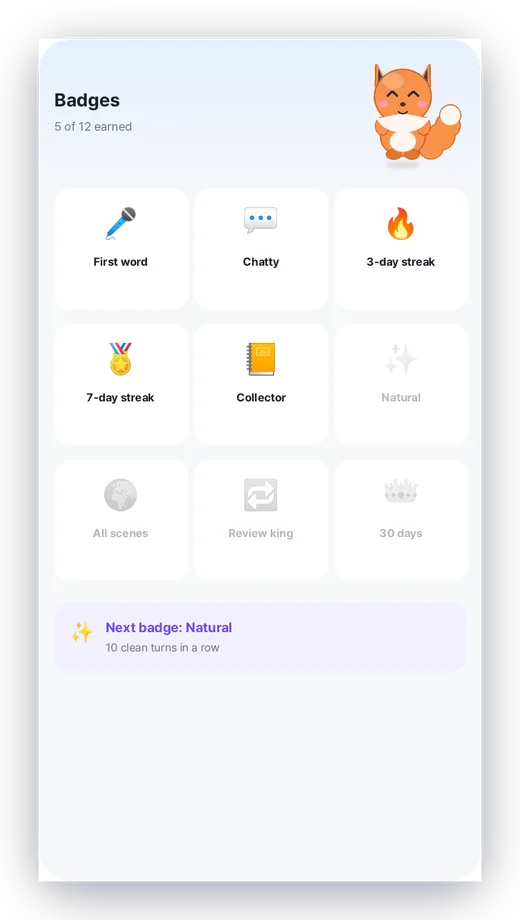
Speaking practice fails on the days you do not open the app. Points, streaks and badges exist for exactly those days.
Points you earn
- Say a sentence10 XP
- Say it with no correction needed+5 XP
- Collect a new phrase+3 XP
- Get a review quiz right+8 XP
13 badges
First words, 50 sentences, 200 sentences, three days running, a full week, a full month, 10 phrases, 50 phrases, ten clean sentences in a row, all twelve situations, 20 review answers, level 10, and three languages spoken.
A daily goal you set
Pick the number of points you want each day and the app tracks your streak against it.
Seven animal buddies







Fox, dog, rabbit, cat, penguin, panda and bear. Your buddy listens while you speak, thinks while the reply is forming, and celebrates when you get it right.
How it works
Pick a language and a situation
Six languages, twelve situations. A cafe order or an airport check is an easy first minute.
Tap the mic and talk
Your speech becomes text on the phone itself. The partner answers and asks you something back.
Get fixed, then review
Corrections appear in the chat with a one-line reason, then return as quizzes over the next 30 days.
Privacy, in plain terms
- Your speech is turned into text on your phone. Audio recordings are never uploaded.
- No account and no sign-in. Your history stays on the device and goes when the app goes.
- The server stores no conversations — only a per-day usage counter tied to a device ID.
- Your learning history is excluded from Android cloud backup, so it does not travel to a server you did not choose.
No subscription
Ten free turns every day, refilled daily. If you want to keep going, a rewarded ad adds ten more, up to three times a day. Ads cover the cost of running the AI — there is nothing to buy and no account to create.
What it does not do
- Android only for now. There is no iPhone version yet.
- Replies need an internet connection — the AI partner runs on a server, not on your phone.
- Free turns are limited per day. Rewarded ads extend them; nothing unlocks unlimited practice.
- Speech recognition quality depends on your phone and its language packs. You can always type instead.
- It is conversation practice, not a graded course. There is no certificate at the end.
Questions
Is it really free?
Yes. There is no subscription and no account. You get ten conversation turns a day, refilled every day, and a rewarded ad adds ten more up to three times a day.
Which languages can I practise?
English, Japanese, Chinese (simplified), Spanish, French and German. You can switch between them at any time and each keeps its own history.
What language are the corrections explained in?
Yours. The app interface comes in 20 languages, and the one-line explanation behind each correction is written in the same language.
Is my voice recorded or uploaded?
No. Speech recognition runs on your phone and only the resulting text is sent to generate a reply. No audio ever leaves the device.
Do I need an account?
No. There is no sign-up and no login. Your history lives on your phone and is deleted with the app.
Does it work without the internet?
The partner's replies need a connection. Reviewing phrases you have already collected works offline.
Is there an iPhone version?
Not yet. idontspeak is an Android app on Google Play.
How is this different from a flashcard app?
Flashcards test words you already chose. Here the material comes out of your own mouth: you speak, the app corrects what you actually got wrong, and only those phrases come back for review.
Can beginners use it?
Yes. Set the level to beginner and the partner answers in one short sentence and one easy question, and you can slow its speaking speed down.
Wasn't this app called Speakza?
Yes. Speakza became idontspeak in September 2026 — same app, same team, a name that says what it is for.